Skip to content
Looking to upgrade your commercial lighting but overwhelmed by choices? You’re not alone—most lighting failures start with poor system planning, not bad products.
LED track lighting is ideal for commercial use because it combines flexibility, efficiency, and visual appeal in one system. The right track light setup supports future layout changes, saves energy, and delivers a better customer experience.
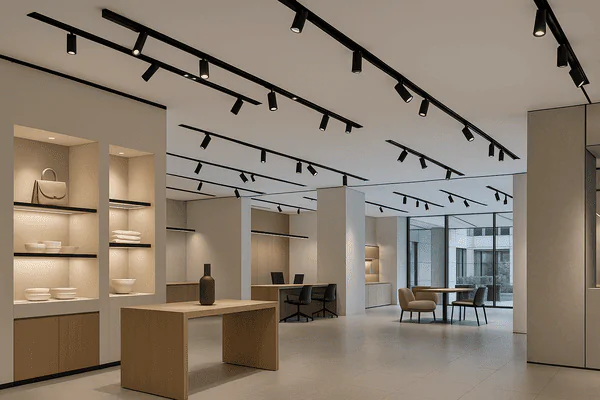
If you think lighting is just about brightness, think again. Choosing LED track lights is about building a smart, adaptable lighting infrastructure that supports your business now and in the future. Let’s break down what makes it work—and how to avoid costly mistakes.
Why LED Track Lights Are Perfect for Businesses?
Many businesses go for bright, uniform lighting and end up with flat, uninspiring spaces. A well-planned led track light
system solves this with flexibility, control, and long-term efficiency.
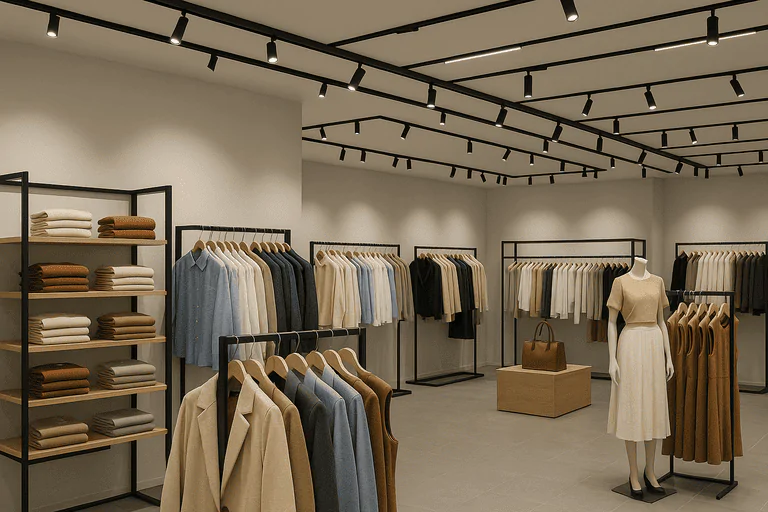
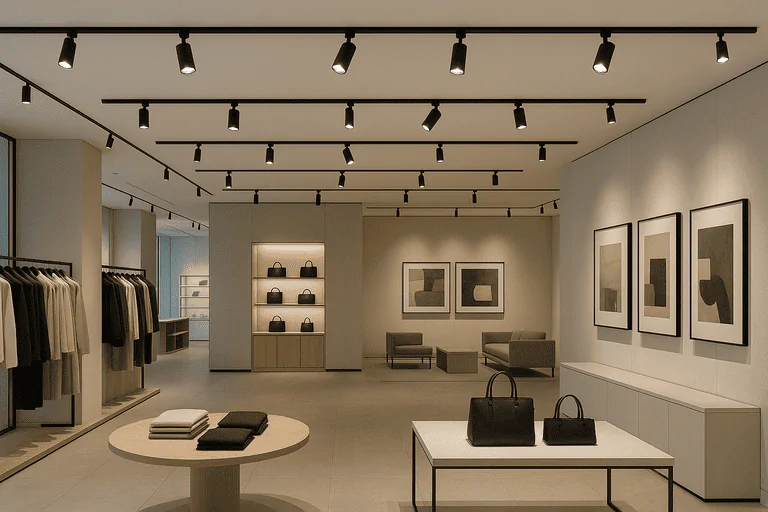
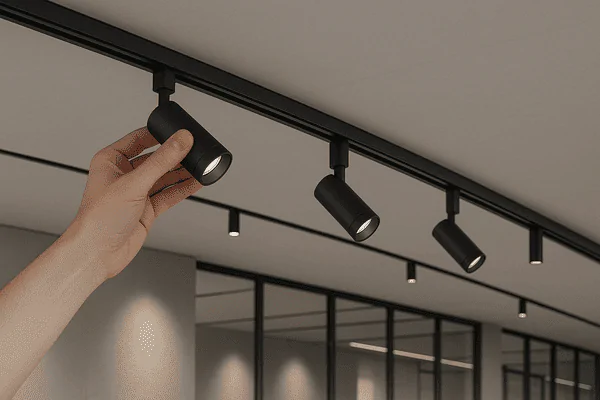
LED track lights1 are perfect for businesses because they allow flexible beam direction, easy repositioning, and compatibility with various fixture types. This creates a dynamic, layered lighting effect that enhances both product visibility and customer mood.
Key Benefits of Track Lighting for Business Environments
LED track lights1 work especially well in retail, office, and hospitality settings. That’s because these spaces often change layouts, displays, or room functions over time. Instead of rewiring each time, you simply slide, rotate, or swap fixtures. Here’s why it matters:
| Feature | Business Advantage |
|---|---|
| Adjustable Heads | Focus light where it’s needed—on displays, signs, or product shelves |
| Modular Tracks | Reconfigure without rewiring the ceiling |
| Variety of Fixtures | Mix spotlights, floodlights, and pendants for layered lighting |
| Stylish Design | Clean, modern look fits many commercial interiors |
From my experience, clients who plan with flexibility in mind save more long-term than those who fixate only on upfront brightness or wattage.
Energy Efficiency and Cost Savings Explained?
Many companies want energy savings but don’t understand how light loss over time affects real efficiency. It’s not just about the watt number on the box.
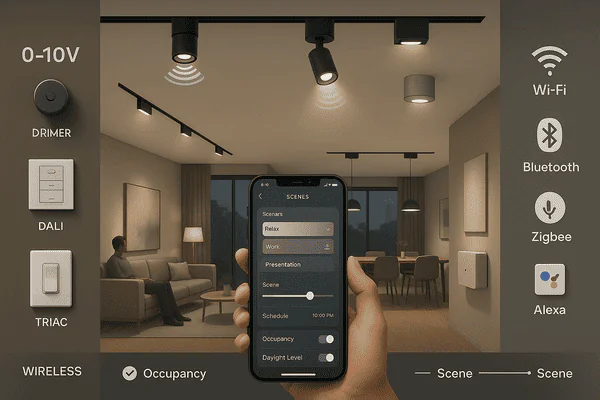
LED track lighting is energy-efficient2 when combined with proper lumen maintenance (LM-80, TM-21)3 and smart controls. These keep brightness stable over time and let you adjust usage by time of day or activity.
What Smart Buyers Look for in Efficiency
Wattage only tells part of the story. True energy savings come from a combination of factors:
| Efficiency Factor | Why It Matters |
|---|---|
| LM-80 & TM-21 Data | Verifies how well LEDs hold brightness over years |
| Dimming & Controls | Lets you lower output in low-traffic hours |
| Driver Efficiency | Impacts actual power draw and lifespan |
| Reflector & Lens Quality | Better optics reduce wasted light |
In several projects I’ve led, clients who installed lighting without these checks ended up replacing fixtures in just two years. That’s avoidable with better upfront planning.
Choosing the Right Wattage and Color Temperature?
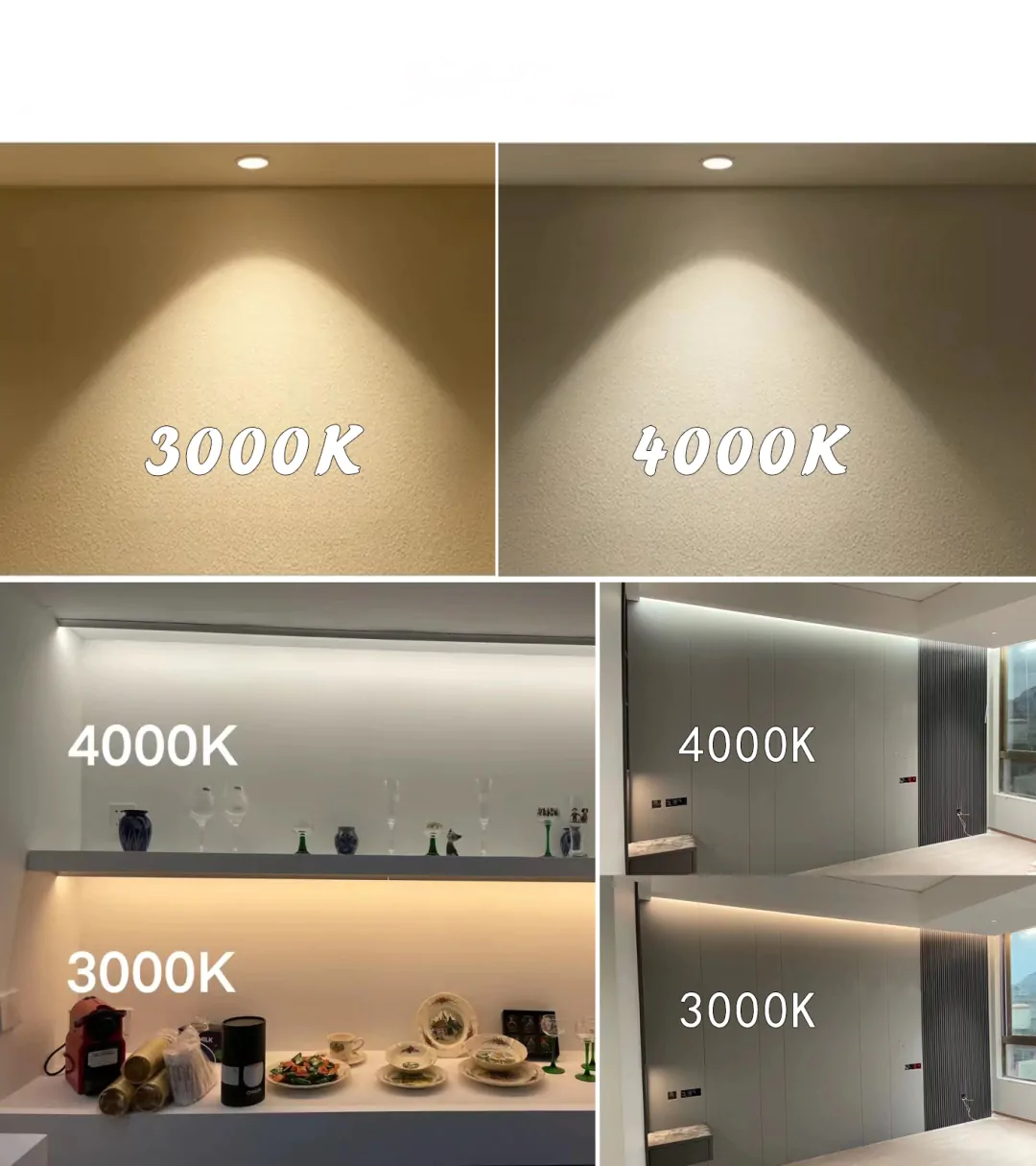
Picking the wrong color temperature4 or wattage can ruin a space. Either it’s too harsh or too dim, and that affects mood, sales, or focus.
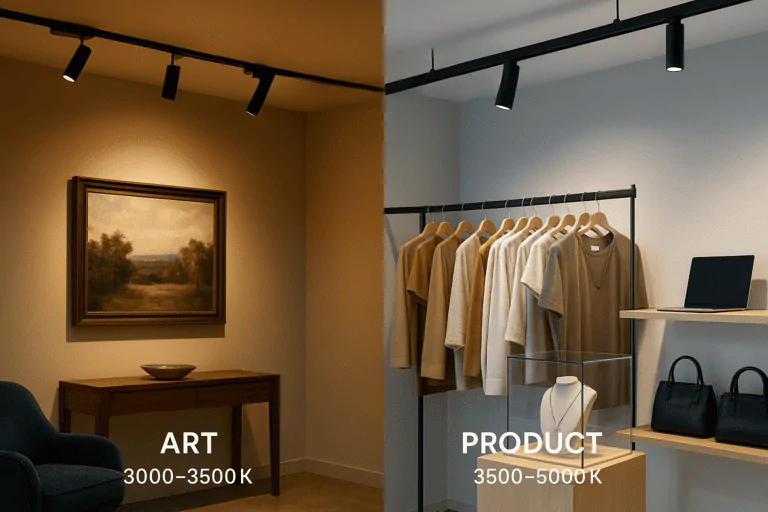
Choose wattage based on ceiling height and task needs, and match color temperature4 to your brand tone. For retail, 3000K to 3500K with CRI 90+ is usually ideal; offices may go cooler for focus.
Simple Guidelines for Better Lighting Choices
When I help clients select LED track lights, these are the basic rules I use:
| Lighting Element | Suggested Range | Use Case |
|---|---|---|
| Wattage | 10W–30W per fixture | Based on ceiling height (e.g. 3–5m) |
| Color Temp | 2700K – 4000K | Warm (retail), Neutral (offices), Cool (clinics) |
| CRI | 90+ | Shows true colors—important for clothing, art, food |
| Beam Angle | 15°–60° | Spot for focus, wide for general area |
The mistake I see most is using one beam angle or color temperature across a large space. That flattens the atmosphere. Layered lighting always wins.
Maintenance Tips for Long-Lasting Performance?
Even high-quality LED lights can fail early without proper maintenance. Dust, heat, and driver failures are common silent killers.
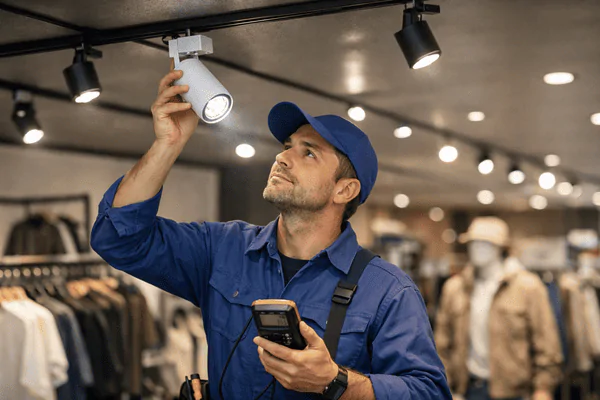
To keep LED track lights5 performing for years, clean fixtures regularly, choose designs with good thermal management6, and monitor drivers for flicker or dimming. Plan replacements by usage hours, not by failure.
How to Extend the Life of Your LED Track Lights
Every fixture has a lifespan—but how you treat it determines how much of that you actually get. Here’s a simple checklist:
| Maintenance Tip | Impact |
|---|---|
| Clean lenses & housings every 6 months | Maintains brightness and beam clarity |
| Check for heat buildup | Overheating reduces LED life quickly |
| Replace drivers every 5–7 years | Even if the LED works, a bad driver ruins performance |
| Watch for flicker or dimming | Early signs of component wear |
| Keep records by install date | Helps plan batch replacements in sync |
Many of my clients who run large stores or hotels now schedule maintenance like clockwork. It reduces emergencies and protects the investment.
Conclusion
Choosing the right LED track lighting isn’t just about looks—it’s a smart business move that affects energy, customer experience, and long-term costs.
-
Explore the advantages of LED track lights to enhance your business’s lighting strategy and improve customer experience. ↩ ↩
-
Exploring energy-efficient lighting options can help you reduce costs and improve sustainability in your space. ↩
-
Understanding LM-80 and TM-21 is crucial for maximizing LED efficiency and ensuring long-term energy savings. ↩
-
Understanding color temperature is crucial for creating the right ambiance in any space, enhancing mood and productivity. ↩ ↩
-
Explore this link to discover essential maintenance tips that can significantly extend the lifespan and performance of your LED track lights. ↩
-
Understanding thermal management is crucial for LED longevity; this resource will provide insights into optimizing your lighting systems. ↩