Skip to content
They look sleek, install like Lego, and slide with a touch—but are magnetic track lights really worth the investment?
Magnetic track lighting offers flexible layouts, easy installation, and clean aesthetics, but also brings higher costs, limited power capacity, and compatibility concerns.

I’ve worked on retail, gallery, and hospitality projects where magnetic systems made perfect sense—and others where they became a headache. Let’s break down when and why they shine, and when to stay cautious.
What are magnetic track lights1 and how do they work?
Magnetic track lights use built-in magnets to attach light modules to a low-voltage track that carries power. The magnetic connection combines both mechanical mounting and electrical contact.
Unlike traditional track lights, magnetic fixtures2 can be easily repositioned, replaced, or mixed with different types of heads on the same rail.

Here’s what makes them different:
- Connection type: Magnetic + contact pins
- Voltage: Usually 24V or 48V DC (safer for open systems)
- Mounting: Tool-free, slide-in, modular
- Light modules: Spotlights, linear bars, wall washers, pendants—interchangeable
This structure makes magnetic tracks a designer’s dream and an operations team’s ally. But it’s not without trade-offs.
Are magnetic track lights safe and durable for daily use?
Yes—if they’re well-made. Quality systems are engineered to prevent drop-offs, contact failures, or magnetic wear over time.
Magnetic track lights use low-voltage power3 and built-in locking or guiding mechanisms, making them safe and stable when sourced from reliable suppliers.
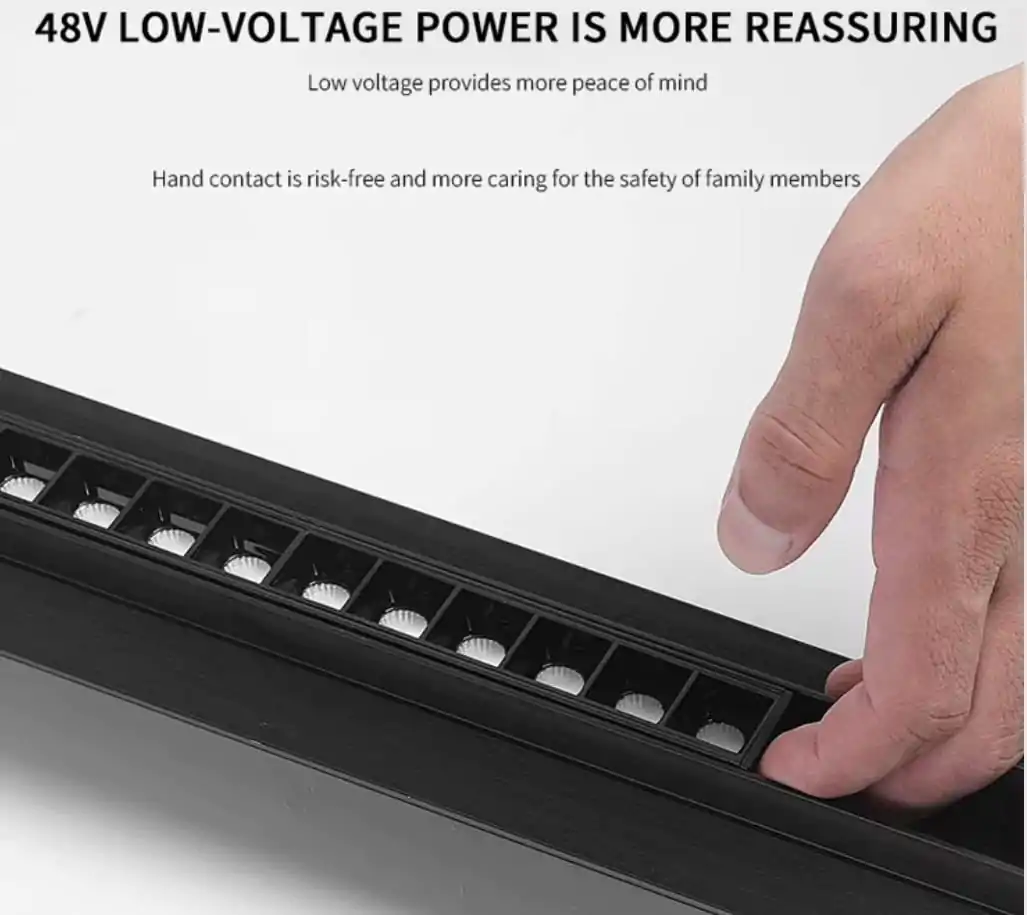
Still, here’s what I always check before recommending them:
| Safety / Durability Factor | What to Look For |
|---|---|
| Contact stability | Gold-plated pins, spring-loaded brushes |
| Locking design | Magnetic + mechanical stop or clip |
| Voltage rating | Low-voltage DC only (24V or 48V) |
| Thermal testing | Verified heating behavior under load |
| Dust and vibration control | Enclosed track design, secure connectors |
I’ve rejected systems before because the magnet strength was weak or the contact points sparked under load. So yes, they’re safe—but only when rigorously tested.
How easy is it to install and adjust magnetic fixtures4?
This is where magnetic tracks win big. Installation and repositioning are faster, cleaner, and more flexible than traditional systems.
Magnetic fixtures can be installed, moved, or replaced in seconds without tools, making them ideal for spaces that frequently change displays or lighting scenes.
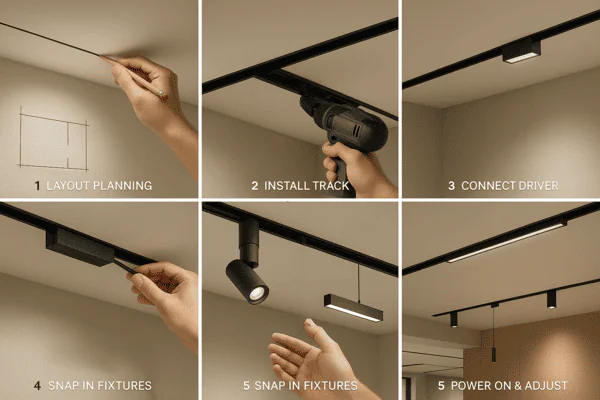
Here’s what makes them convenient:
- Tool-free changes – just pull and slide
- Mixed optics on one track – spot + linear + pendants
- Low-profile designs – clean ceiling visuals
- Modular expansion – add new modules without rewiring
In gallery or retail projects where layout changes monthly, this flexibility saves hours of labor and avoids damaging ceilings or wiring. I’ve seen clients fall in love with the freedom it gives their visual merchandising teams.
What are common applications for magnetic systems?
Magnetic track lighting is best used in display-driven, high-end, and design-focused spaces where lighting flexibility and visual minimalism are priorities.
Magnetic tracks5 work best in retail flagships, art galleries, exhibitions, luxury showrooms, and modern office lobbies—especially where lighting layout needs to evolve.

I recommend magnetic systems for these scenarios:
| Recommended For | Reason |
|---|---|
| Fashion and lifestyle retail | Fast layout changes, spotlight control |
| Art galleries / exhibitions | Clean ceilings, mixed optics, easy scene resets |
| Hospitality front-of-house | Elegant finishes, low glare |
| Modular showrooms | New products, new light—no electrical change needed |
| High-end office reception | Minimalist design language + dimmable control |
Where they don’t fit well:
- Large, high-ceiling spaces needing high wattage
- Projects with tight budgets
- Sites with no space for embedded track routing
- Retrofits needing backward compatibility with traditional tracks
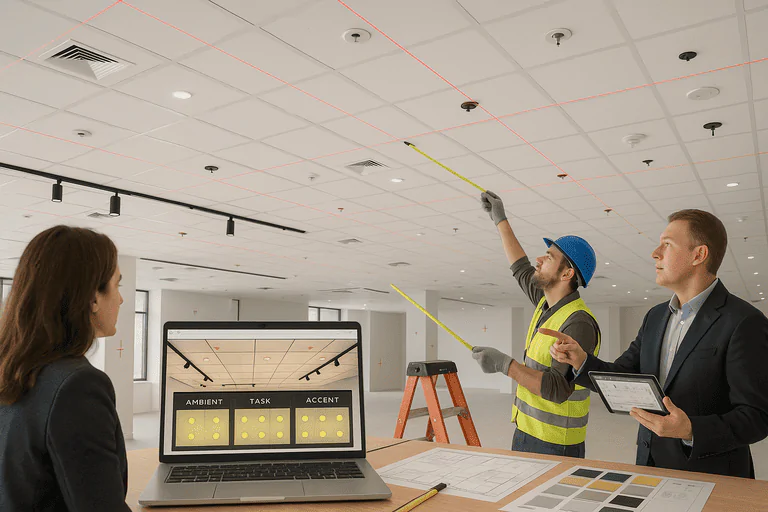
Always map physical layout and power limits before committing.
Conclusion
Magnetic track lights deliver top-tier aesthetics and adjustability—but come with premium costs and specific design constraints. If your space demands frequent reconfiguration, visual clarity, and low-voltage safety, they’re well worth the investment.
-
Explore this link to understand the innovative design and functionality of magnetic track lights, enhancing your lighting knowledge. ↩
-
Discover the advantages and versatility of magnetic fixtures in lighting systems, perfect for modern design needs. ↩
-
Learn about the benefits of low-voltage power in lighting systems, enhancing safety and efficiency in your installations. ↩
-
Explore the advantages of magnetic fixtures for flexible lighting solutions that save time and enhance design. ↩
-
Explore this resource to understand how magnetic tracks enhance flexibility and aesthetics in various lighting applications. ↩