Skip to content
If your lighting project demands flexibility, fast installation, and a sleek design, but you’re overwhelmed by options—you’re not alone.
Magnetic track lighting systems offer a flexible, modular, and efficient solution that adapts to various commercial and residential applications.
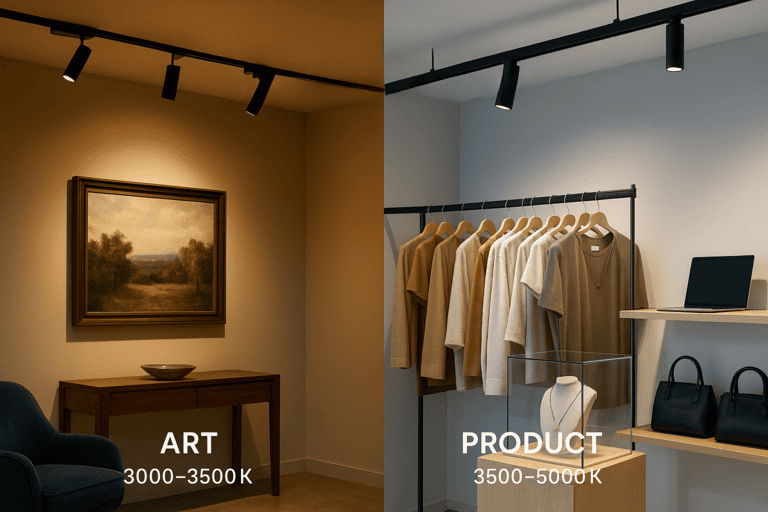
When I started working with lighting systems, I struggled to explain to clients why some lights suited their space better than others. Once I discovered magnetic track systems, things changed. Their design, ease of use, and performance made them easier to recommend and customize for many projects.
To give you a clear and practical understanding of magnetic track lighting, I’ve organized this guide into key sections—from fundamentals and advantages, to applications, installation, cost analysis, customization, and future trends—so you can evaluate whether this system truly fits your project needs.
Introduction to Magnetic Track Lighting
Magnetic track lighting is a modern, modular lighting system that has transformed how architects, designers, and contractors think about illumination. Unlike traditional track lights that rely on mechanical fasteners, magnetic track lights use a magnetic connection between the fixture and the track. This makes the process of installation, adjustment, and replacement faster, cleaner, and more flexible.
What Is Magnetic Track Lighting?
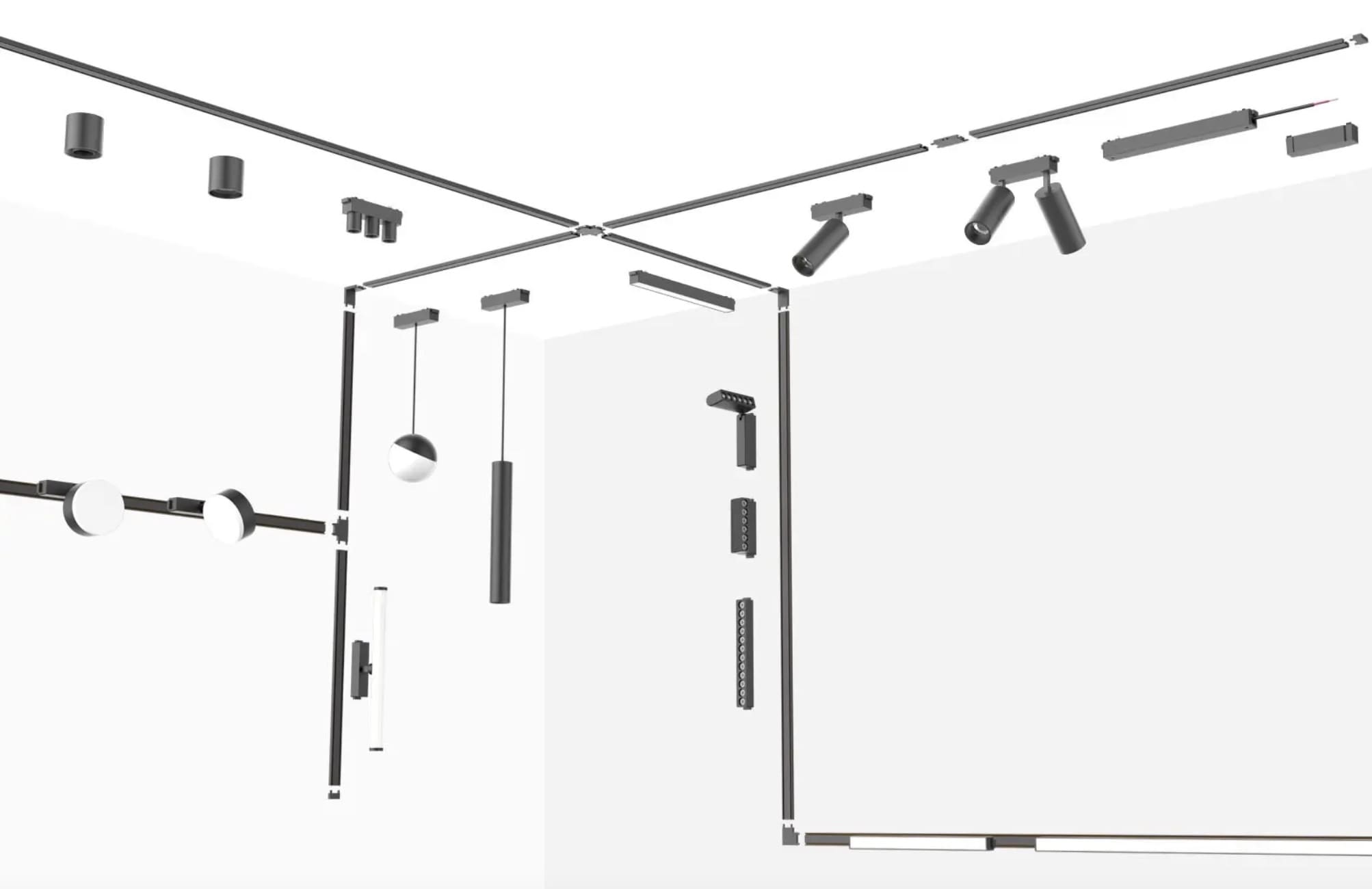
At its core, a magnetic track light system consists of three main parts: the track (surface-mounted, recessed, or suspended), the light modules (spotlights, linear bars, pendants, wall washers, etc.), and the low-voltage driver (24V/48V). The magnetic design allows each module to snap into place instantly, making it possible to create dynamic lighting layouts without rewiring or complex tools.
Brief History & Development
The concept of track lighting dates back to the mid-20th century, originally designed for art galleries and commercial spaces where flexibility was essential. Over the years, LED technology, miniaturization, and smart controls paved the way for magnetic systems. By the late 2010s, magnetic track lighting1 became a go-to choice for premium retail and hospitality projects, and today it is rapidly expanding into residential and office applications.
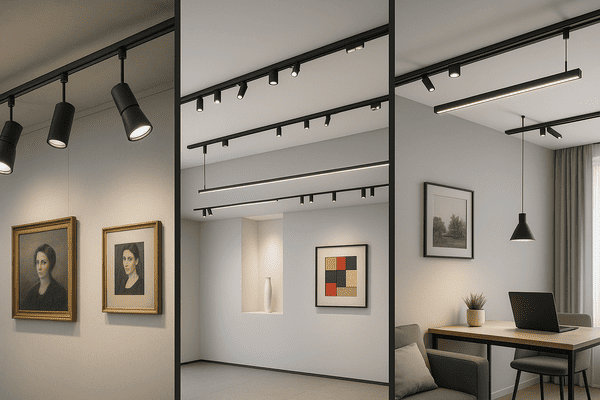
Why It Became Popular in Modern Interiors
Several trends have contributed to its rise:
- Minimalist Architecture: Slim magnetic tracks blend into ceilings and walls, maintaining a clean look.
- Adaptive Needs: Retailers and galleries constantly change layouts, requiring lighting that can evolve with them.
- Smart Living: Integration with dimming, sensors, and home automation makes magnetic systems future-proof.
For professionals, magnetic track lighting1 is not just another option — it represents a new standard in flexible, design-driven, and energy-conscious lighting solutions2.
Key Advantages of Magnetic Track Lighting
When project managers, architects, or lighting designers choose a lighting system3, the decision is never only about illumination. It is about how well the system adapts to changing requirements, how efficiently it consumes energy, and how seamlessly it integrates into the overall design. This is where magnetic track lighting excels.
Flexibility & Modularity
Unlike fixed downlights or bulky conventional track systems, magnetic track lights4 are fully modular. Each fixture — whether a spotlight, linear module, or wall washer — attaches magnetically to the track, allowing users to reconfigure layouts in minutes without specialized tools. For retailers, this means lighting can evolve with seasonal displays; for galleries, exhibits can be highlighted differently every few months.
Energy Efficiency & Sustainability
Most magnetic track lighting system3s operate on low-voltage (24V or 48V) DC power. This not only reduces energy consumption but also minimizes heat output, extending the lifetime of both LEDs and drivers. When combined with smart dimming or motion sensors, magnetic lighting delivers up to 40% more energy savings compared to conventional fixtures, making it a sustainable solution aligned with green building standards.
Aesthetic Value in Modern Design
Interior designers often face the challenge of balancing functionality with visual appeal. Magnetic track lights offer a sleek, minimalistic profile that integrates effortlessly into ceilings, walls, or suspended tracks. Their almost invisible appearance makes them a favorite in high-end retail, luxury hotels, and contemporary offices. Furthermore, the ability to mix modules adds depth and texture to a lighting design without compromising elegance.
Safety & Maintenance Benefits
Because fixtures attach magnetically, there is no risk of loose screws or damaged fittings during routine adjustments. The low-voltage system also enhances safety for installers and end-users. Maintenance teams can quickly replace defective modules without shutting down the entire system, reducing downtime for businesses such as retail stores or exhibition halls.
In short, magnetic track lighting delivers a unique combination of adaptability, efficiency, aesthetics, and reliability, making it one of the most future-proof choices in the commercial lighting industry.
Types of Magnetic Track Lights
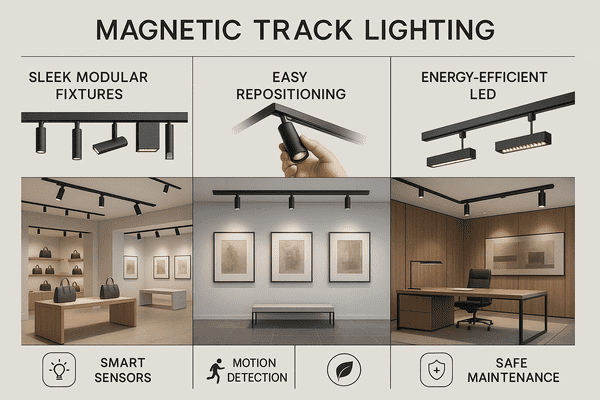
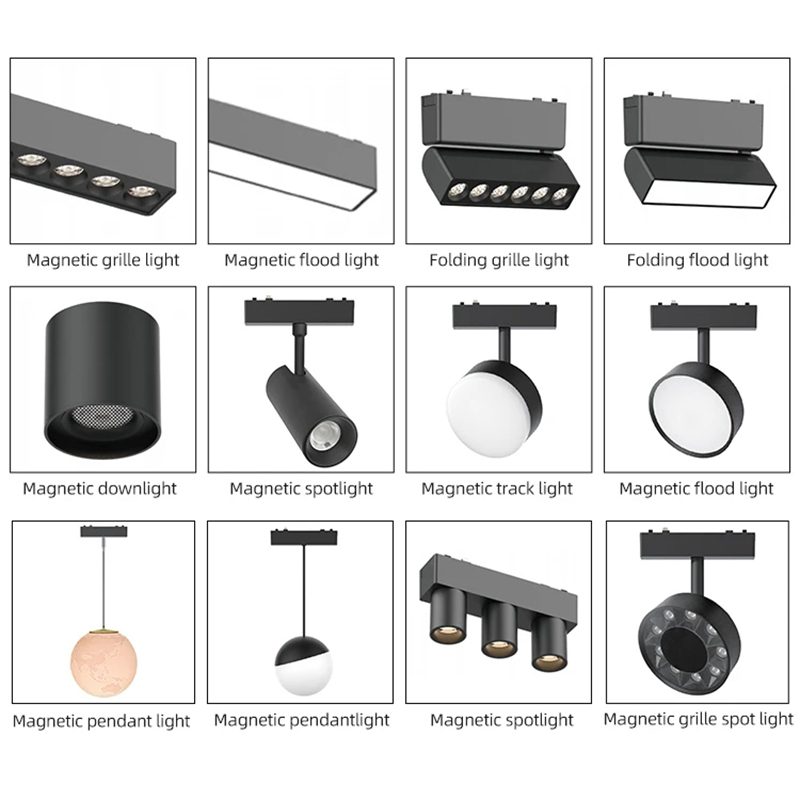
One of the main reasons magnetic track lighting has gained popularity is the wide variety of fixtures that can be mounted on the same track. This flexibility allows designers to create different moods and highlight specific areas without changing the infrastructure. Below are the most common types of magnetic track lights and their best applications.
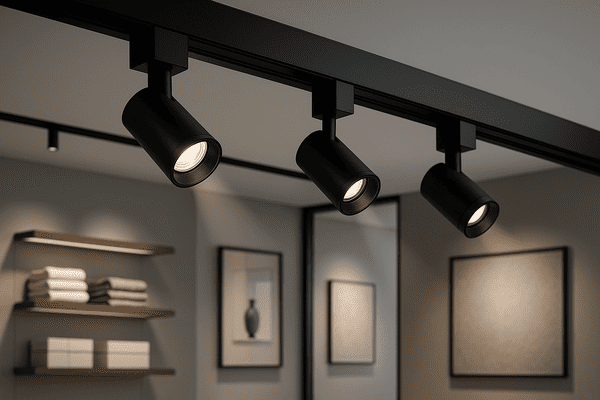
Magnetic Spotlights5
Spotlights are the most versatile modules in a magnetic track system. They deliver focused beams that highlight products, artworks, or architectural features. Adjustable angles allow precise control over lighting direction, making them ideal for retail displays, galleries, or showrooms where accent lighting is essential.
Best use cases: product shelves, display windows, art pieces.
Technical note: typically available in 15°–45° beam angles.
Magnetic Linear Lights6
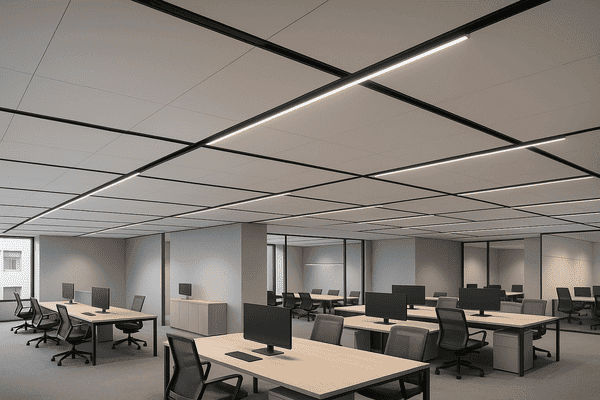
Linear lights provide continuous, even illumination across wider areas. Their slim design integrates seamlessly into ceilings and walls, creating a clean and modern appearance. Linear modules are frequently used in offices, conference rooms, or hallways where consistent, glare-free lighting is required.
Best use cases: open-plan offices, corridors, co-working spaces.
Technical note: lengths range from 300 mm to 1200 mm, with power outputs between 10W and 40W.
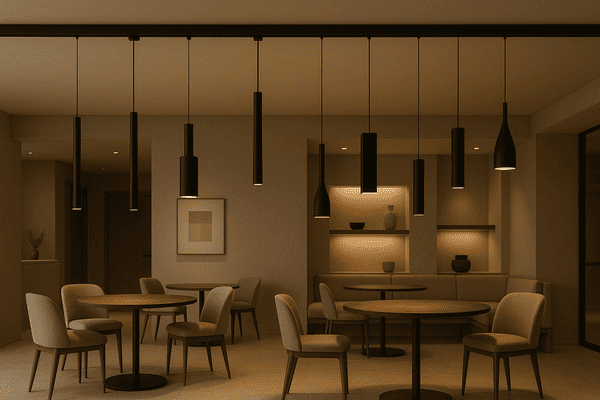
Magnetic Pendant Lights7
Pendant modules bring both functionality and style. Suspended from the track, they create vertical lighting that adds character to spaces like restaurants, cafés, or hotel lobbies. Their decorative appeal makes them popular in both commercial and residential projects.
Best use cases: dining tables, reception desks, hospitality lounges.
Technical note: available in cylindrical, rectangular, or custom shapes, often with dimming features.
Magnetic Wall Washers8
Wall washer modules spread light evenly across vertical surfaces, enhancing textures, artworks, or brand graphics. They are commonly used in retail stores and galleries to highlight feature walls or signage. Wall washers add depth and atmosphere to a space, guiding the viewer’s attention without creating harsh shadows.
Best use cases: retail branding walls, art exhibitions, showroom displays.
Technical note: asymmetric optics ensure smooth wall illumination from top to bottom.

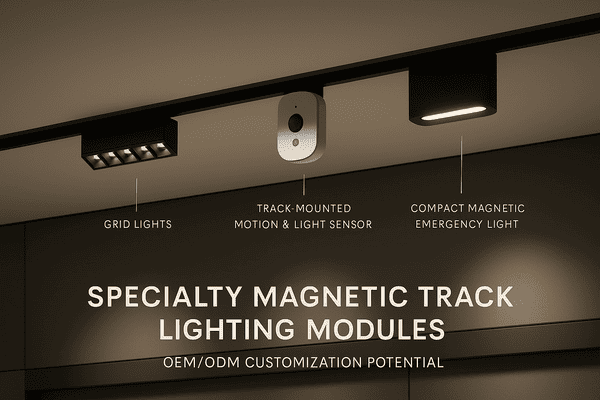
Specialty Modules9 (Optional)
Some manufacturers, especially OEM/ODM factories, offer specialty modules such as grid lights, track-mounted sensors, or even magnetic emergency lights. These add extra functionality and can be tailored for unique project needs.
In practice, most projects combine two or more types of magnetic track lights on the same rail to achieve a layered effect: spotlights for highlights, linear lights for general illumination, and wall washers for feature walls. This mix-and-match approach is what makes magnetic track systems10 so powerful compared to traditional lighting.
Applications & Case Studies
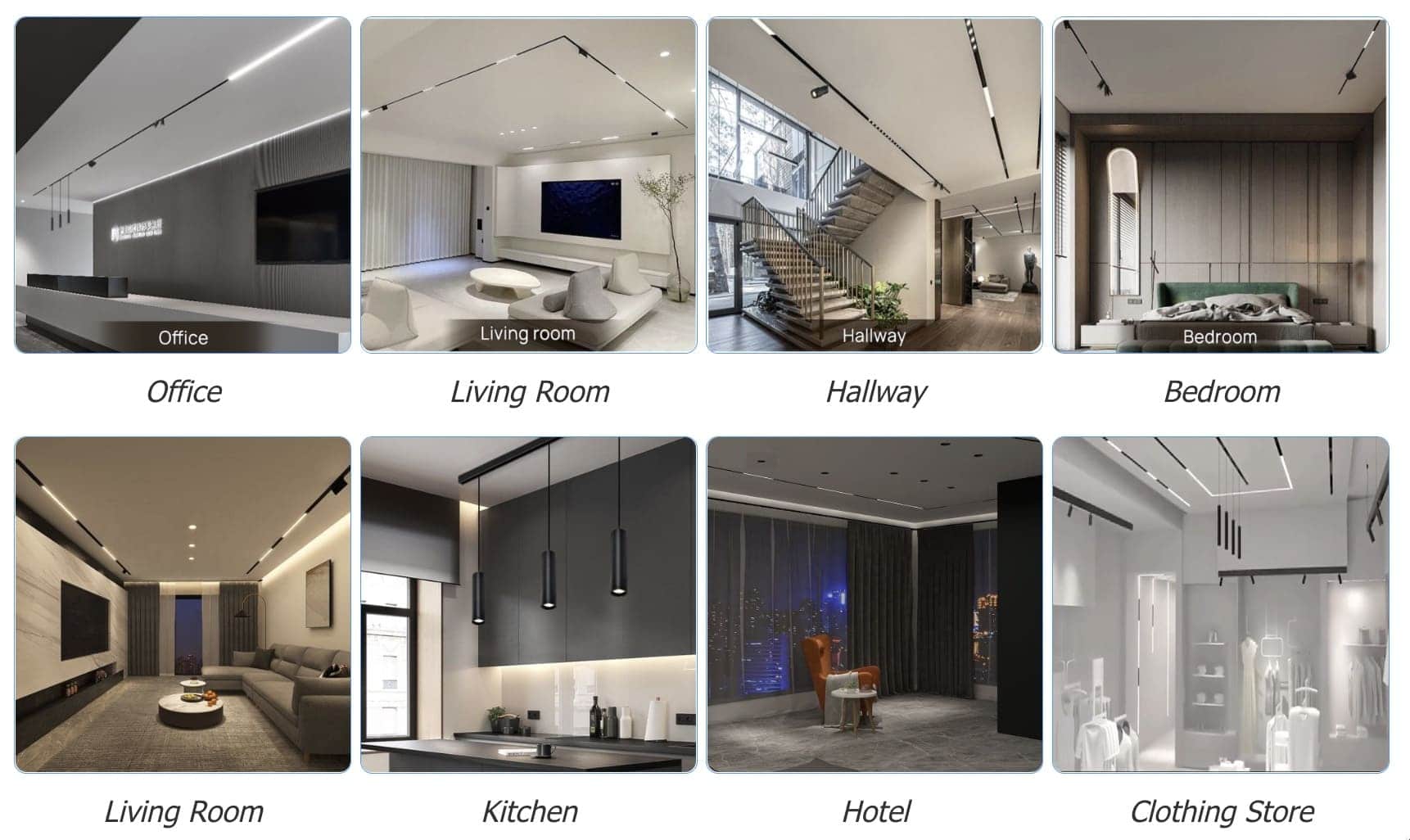
Magnetic track lighting is not just about technology — it is about how light transforms a space. Because of its flexibility and modularity, it has found applications across a wide range of industries. From retail stores to art galleries, from hotels to modern offices, magnetic lighting delivers both performance and visual impact. Below are the most important applications, supported by real-world use cases.
Retail & Showrooms
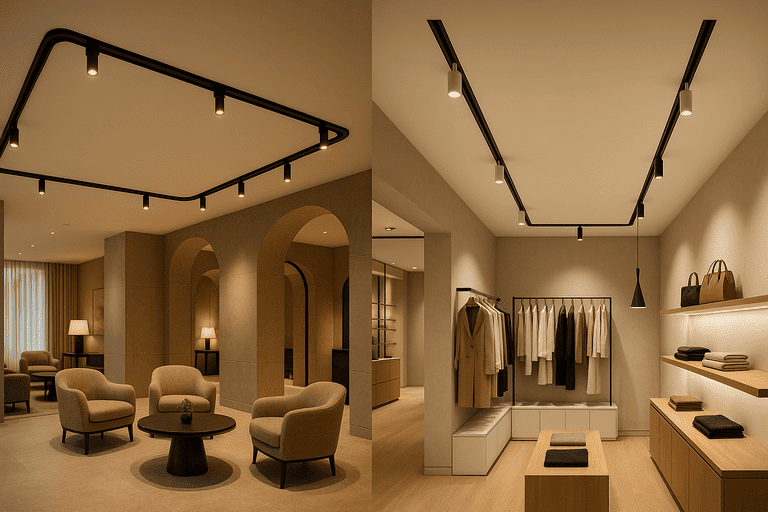
In retail, lighting plays a crucial role in creating atmosphere and driving sales. Magnetic spotlights are frequently used to highlight seasonal products or promotional areas, while linear modules ensure consistent brightness across aisles. The ability to reposition fixtures without rewiring allows retailers to adapt quickly to new layouts.
Case study: A fashion retailer in Milan used magnetic track lighting11 to reconfigure its showroom every quarter. Spotlights emphasized mannequins at the entrance, while wall washers brought life to the branding wall. The result was a 22% increase in average customer dwell time, as reported by the store manager.

Art Galleries & Museums
Galleries demand precision and flexibility. Paintings and sculptures often change, and so must the lighting. Magnetic spotlights with narrow beams provide accent lighting for individual artworks, while wall washers create smooth, uniform illumination for larger canvases. Because fixtures can be repositioned instantly, curators can adapt to new exhibitions in minutes.
Case study: A contemporary art gallery in Berlin replaced its old halogen track lights with 48V magnetic systems. The gallery reported lower heat emissions — protecting sensitive artworks — and a 35% reduction in energy consumption.

Hotels & Hospitality
Hotels need lighting that blends function and design. Magnetic pendant lights create welcoming atmospheres in lobbies and dining areas, while linear lights provide discreet illumination in corridors. Because of the system’s modularity, hotels can adjust lighting layouts for special events without costly renovations.
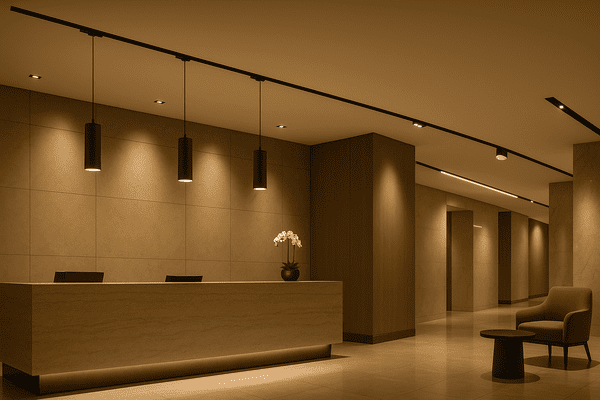
Case study: A luxury hotel in Dubai used magnetic track systems in its lobby. Pendant modules above the reception desk created a warm ambiance, while spotlights highlighted architectural features. The lighting design became part of the hotel’s identity, frequently mentioned in guest reviews.
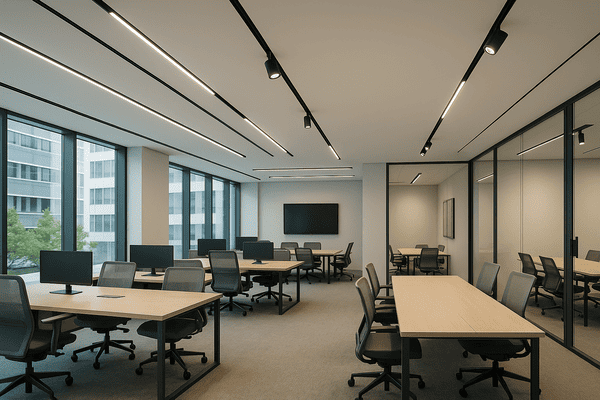
Offices & Co-working Spaces
Modern offices emphasize flexibility, productivity, and comfort. Magnetic linear lights provide uniform task lighting for open-plan work areas, while spotlights are used in meeting rooms for presentations. The ability to integrate smart controls allows dimming and scheduling based on occupancy, improving both efficiency and employee well-being.
Case study: A tech co-working space in Singapore installed magnetic track lighting11 across its office. Designers appreciated the slim recessed tracks that blended into the ceiling, while users enjoyed customizable lighting levels. The facility reported a 28% improvement in employee satisfaction related to lighting comfort.
Residential & High-end Homes (Optional)
Although primarily used in commercial spaces, magnetic lighting is becoming popular in luxury residences. Homeowners install recessed tracks in living rooms or kitchens, combining spotlights and linear modules for a modern, minimal look. Smart dimming adds comfort and personalization.
[^11]](https://ilightin.com/wp-content/uploads/2025/09/High-end-residential-application.png)
Summary of Applications
Magnetic track lighting is versatile enough to serve in retail, art, hospitality, office, and even residential settings. Each case demonstrates its value: adaptability, energy savings, and design impact. For decision-makers, this means a single system can meet diverse needs across industries.
Installation & Configuration Guide
One of the biggest advantages of magnetic track lighting12 is its simplified installation process13. Compared to traditional lighting systems, it requires fewer tools, less wiring complexity, and offers far greater flexibility in configuration. Whether it’s for a new construction project or a renovation, the system can be adapted to different ceiling types and design requirements.
Track System Basics
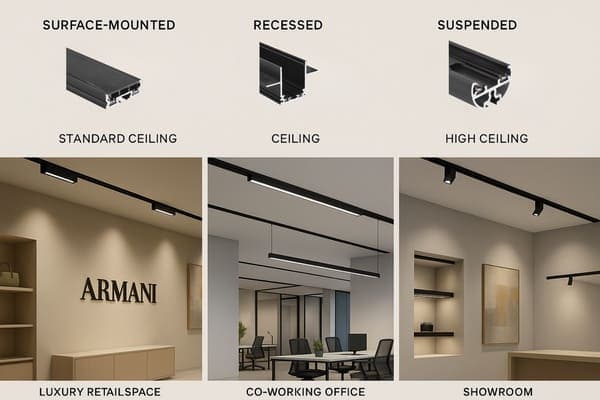
The magnetic track forms the backbone of the system. It is available in three main configurations:
- Surface-mounted tracks: Ideal for ceilings without a cavity or for quick installations.
- Recessed tracks: Integrated into the ceiling for a seamless, minimalist appearance.
- Suspended tracks: Hung from the ceiling with wires, perfect for high ceilings or open-space designs.
Choosing the right track depends on the architecture and design goals of the project. For example, recessed tracks are favored in luxury retail, while suspended tracks are common in co-working spaces.
Step-by-Step Installation Process
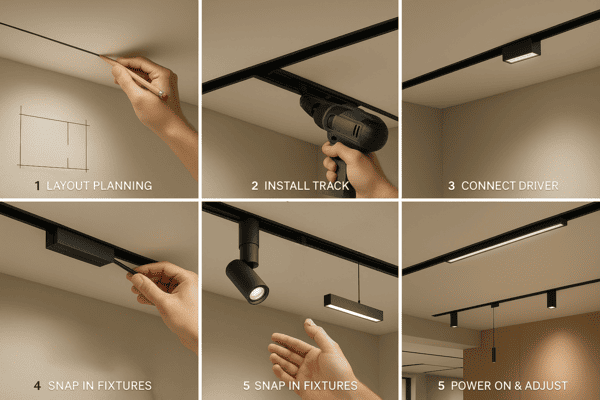
Installing a magnetic track system typically follows these steps:
- Plan the Layout – Mark track positions according to the lighting design.
- Install the Track – Fix the surface, recessed, or suspended track to the ceiling.
- Connect the Driver – Attach the low-voltage14 (24V/48V) driver to the track’s power input.
- Snap in the Modules – Place spotlights, linear lights, or pendants directly into the magnetic track.
- Test & Adjust – Power on the system and re-position modules as needed for optimal lighting.
This streamlined process reduces labor costs and installation time compared to conventional systems.
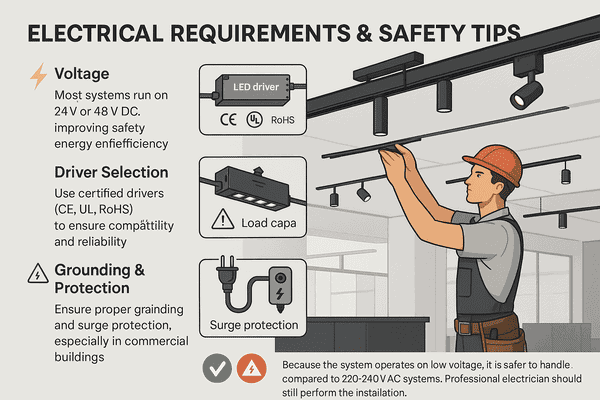
Electrical Requirements & Safety Tips
- Voltage: Most systems run on 24V or 48V DC, which improves safety and energy efficiency.
- Driver Selection: Use certified drivers (CE, UL, RoHS) to ensure compatibility and reliability.
- Load Capacity: Avoid exceeding the maximum wattage capacity of each track.
- Grounding & Protection: Ensure proper grounding and surge protection, especially in commercial buildings.
Because the system operates on low voltage, it is safer to handle compared to 220–240V AC systems. However, professional electricians should still perform the installation to comply with local codes.
Smart Control & Dimming Options
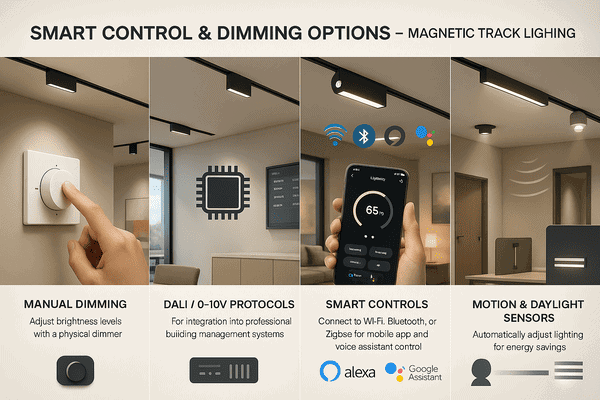
Modern magnetic track systems support a wide range of control methods:
- Manual Dimming – Adjust brightness levels with a physical dimmer.
- DALI / 0-10V Protocols – For integration into professional building management systems.
- Smart Controls – Connect to Wi-Fi, Bluetooth, or Zigbee for mobile app and voice assistant control.
- Motion & Daylight Sensors – Automatically adjust lighting for energy savings.
This makes magnetic track lighting12 not just flexible in layout, but also adaptable to evolving smart building technologies.
Conclusion of Installation Guide
The installation and configuration of magnetic track lighting12 is straightforward, but the results are powerful: faster installation, safer operation, and more customization options than almost any other lighting system. This is why it is increasingly favored in projects ranging from luxury boutiques to modern office complexes.
Cost Analysis & ROI
When considering magnetic track lighting15, one of the first questions buyers ask is: How much does it cost, and is it worth the investment? While the upfront cost may appear higher than traditional lighting solutions, the long-term savings16 in energy, maintenance, and flexibility often result in a strong return on investment (ROI).
Initial Purchase Cost
The initial cost of a magnetic track lighting15 system is typically higher than conventional track lights due to its modular design and low-voltage driver requirements.
- Track: $20–40 per meter (depending on type: surface, recessed, suspended).
- Light Modules: $30–80 per piece (spotlights, linear bars, pendants, wall washers).
- Drivers: $50–100 depending on wattage and control protocol.
For a medium-sized retail store (approx. 100 m²), the total purchase cost ranges between $2,500–$4,000, compared to $1,800–$2,500 for a traditional track lighting system.
| Category | Details / Cost |
|---|---|
| Initial Purchase Cost | Higher than conventional track lights due to modular design & low-voltage drivers. |
| Track | $20–40 per meter (surface, recessed, suspended). |
| Light Modules | $30–80 per piece (spotlights, linear bars, pendants, wall washers). |
| Drivers | $50–100 depending on wattage & control protocol. |
| Medium-sized Retail Store (100 m²) | Total: $2,500–$4,000 (vs. $1,800–$2,500 for traditional track lighting). |
Installation & Maintenance Costs
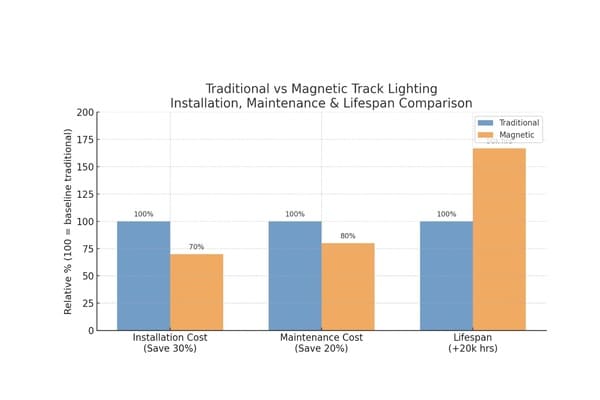
Magnetic systems save significantly on labor and maintenance:
- Installation: Faster and simpler, reducing labor costs by up to 30%.
- Maintenance: Modules can be replaced instantly without rewiring, cutting downtime.
- Longevity: LEDs and drivers typically last 50,000+ hours, lowering replacement frequency.
example: A hotel in Dubai reported a 20% reduction in maintenance costs17 after switching to magnetic lighting, thanks to easy fixture replacement.
Long-term Energy Savings
Because magnetic track lighting15 runs on 24V/48V low-voltage systems and uses high-efficiency LEDs, it consumes significantly less power.
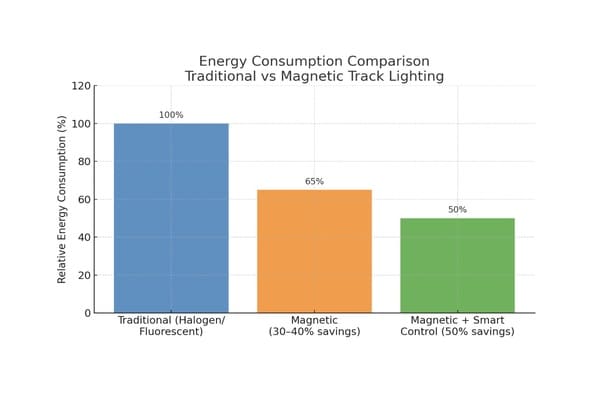
- Average savings: 30–40% compared to halogen/fluorescent systems.
- With smart dimming and sensors: up to 50% savings.
For a retail store operating 12 hours/day, energy savings18 can reach $500–$700 annually, depending on local electricity costs.
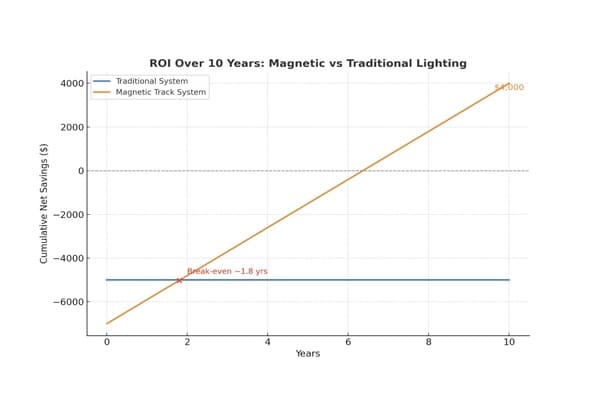
ROI Example Calculation
Consider a 200 m² retail showroom:
- Initial investment: $7,000 (magnetic system) vs. $5,000 (traditional system).
- Energy savings: $800 per year.
- Maintenance savings: $300 per year.
Total savings per year: $1,100.
Payback period = (Extra $2,000 upfront ÷ $1,100 annual savings) ≈ 1.8 years.
After 2 years, the system starts generating net savings, and over a 10-year span, total savings can exceed $8,000, making magnetic track lighting15 a cost-effective and sustainable solution.
| Item | Traditional System | Magnetic System |
|---|---|---|
| Initial Investment | $5,000 | $7,000 |
| Annual Energy Savings | $0 | $800 |
| Annual Maintenance Savings | $0 | $300 |
| Total Annual Savings | $0 | $1,100 |
| Payback Period | – | ~1.8 years |
| 10-Year Net Savings | – | $8,000+ |
Conclusion of Cost Analysis
While magnetic track lighting15 requires a higher upfront investment, it offers:
- Lower installation costs19
- Reduced maintenance expenses
- Significant energy savings18
- Fast ROI (often within 2 years)
For buyers focused on total cost of ownership20 (TCO) rather than just purchase price, magnetic track lighting15 is a financially sound choice.
Customization Options (OEM/ODM)
For international buyers, one of the most attractive features of magnetic track lighting21 is its high level of customization. Unlike off-the-shelf solutions, OEM (Original Equipment Manufacturer) and ODM (Original Design Manufacturer) services allow customers to tailor the lighting system to meet their specific project requirements. This flexibility makes magnetic track lights not only a functional solution but also a branding and design opportunity.
Different Sizes & Modules
Magnetic track systems22 can be adapted to various architectural layouts:
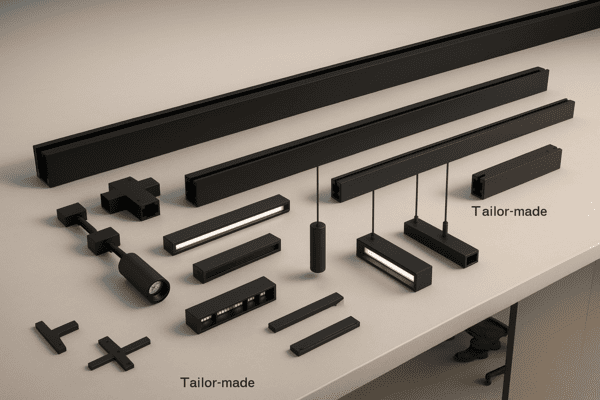
- Track Lengths: Customizable in 0.5m, 1m, 2m, or tailor-made dimensions.
- Light Modules: Spotlights, linear bars, pendants, and wall washers in different wattages and beam angles.
- Connection Types: L-shaped, T-shaped, and cross connectors for flexible layouts.
Example: A European retail chain ordered recessed magnetic tracks cut to fit their store blueprint, reducing installation time by 20%.
Color Temperature & CRI Options
Lighting quality is critical in creating the right ambiance. Manufacturers offer:
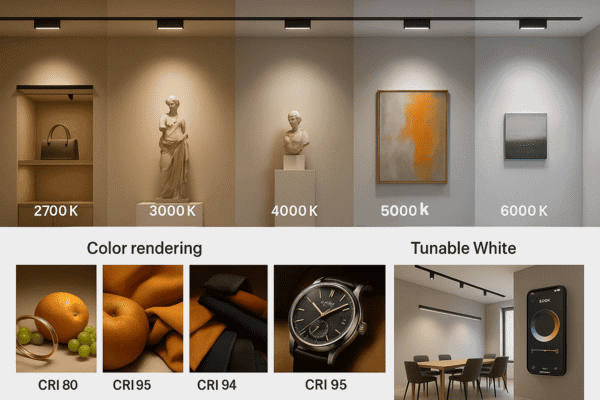
- Color Temperatures23: 2700K (warm), 3000K (neutral warm), 4000K (neutral white), 6000K (cool white).
- High CRI (>90)24: Ensures accurate color rendering, essential for fashion stores, galleries, and high-end retail.
- Tunable White: Adjustable color temperature for multi-purpose spaces.
Example: A luxury watch retailer requested CRI 95 spotlights at 3500K to ensure their products appeared vibrant and true-to-life under store lighting.
Smart Control Integration25
Customization also extends to control systems:
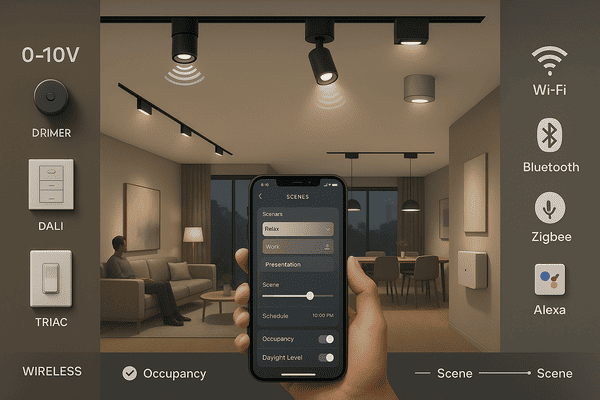
- Dimming Protocols: 0-10V, DALI, TRIAC, or wireless.
- Smart Integration: Wi-Fi, Bluetooth, or Zigbee for app and voice control.
- Sensor Options: Motion and daylight sensors for energy savings.
This ensures the system fits not only design requirements but also smart building or home automation projects.
Branding & Packaging
For distributors and wholesalers, OEM services include:
- Custom Logo Printing26: On fixtures, drivers, or packaging.
- Packaging Design: Tailored boxes with company branding for retail sales.
- Exclusive Product Lines27: ODM services to develop unique modules for specific markets.
Example: An Australian distributor worked with a Chinese manufacturer to launch a private-label magnetic track system under their own brand, helping them stand out in a competitive market.
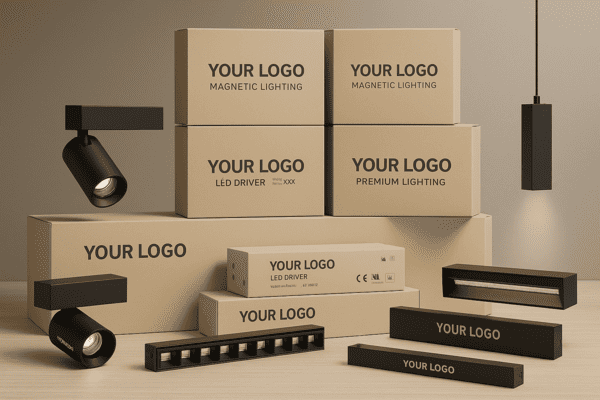
OEM and ODM capabilities transform magnetic track lighting21 from a standardized product into a personalized solution. Whether it is custom dimensions, tailored color temperature, smart control integration, or branded packaging, customization provides buyers with a competitive edge in their markets.
For businesses looking to build long-term partnerships and create differentiated offerings, choosing a manufacturer with strong customization capabilities is essential.
Common Problems & Pitfalls to Avoid
Even though magnetic track lighting offers many advantages, buyers and installers can still face challenges if the system is not properly selected or installed. Being aware of these pitfalls helps avoid unnecessary costs, delays, and performance issues.
Choosing Non-standard Tracks
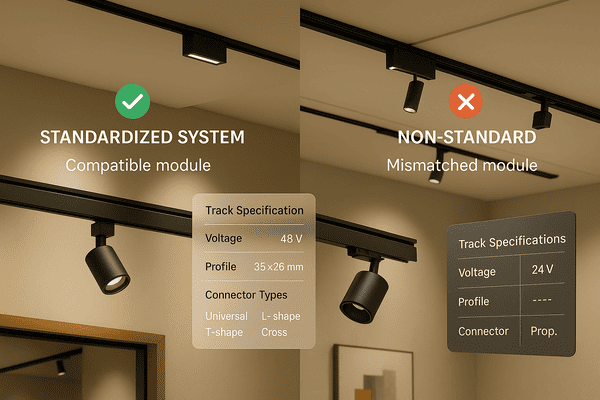
Not all magnetic track systems follow the same specifications. Some manufacturers use proprietary track sizes or connectors that limit compatibility. If buyers mix modules from different suppliers, they may find the lights cannot fit or the connections are unstable.
Tip: Always confirm track specifications (24V or 48V, profile size, connector type) and work with suppliers who offer standardized systems28 with clear technical datasheets.
Overloading the Power Capacity
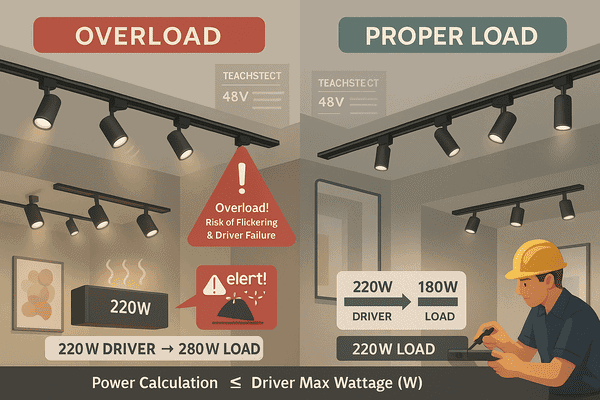
Every track system has a maximum wattage capacity determined by the driver. Installing too many modules or high-wattage fixtures on one track can cause flickering, overheating, or even driver failure.
Tip: Calculate total wattage before installation and select drivers with at least 20% extra capacity. For example, if the modules total 180W, use a 220W driver.
Poor Heat Dissipation
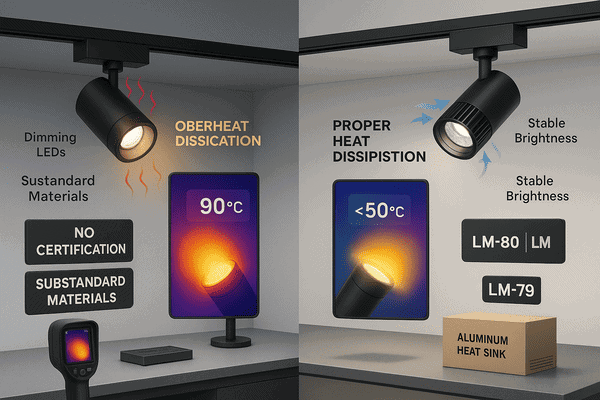
High-powered modules, especially spotlights, generate heat. If the system uses substandard aluminum housing or lacks proper thermal design, LEDs may degrade faster, reducing lifespan and brightness.
Tip: Choose fixtures with aluminum heat sinks29 and request LM80/LM79 test reports to verify LED performance over time.
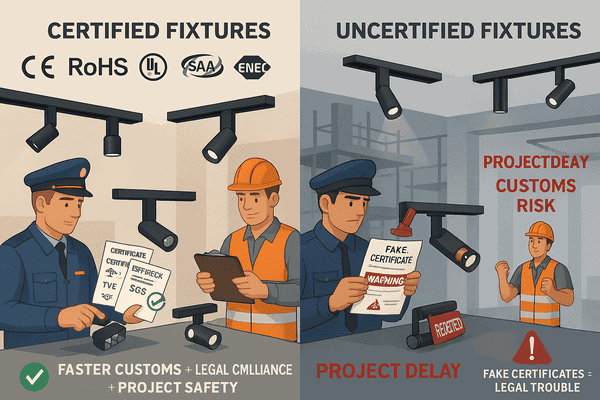
Ignoring Certification Requirements
For international projects, certifications are not optional — they are mandatory. Using uncertified fixtures may result in failed inspections, project delays, or customs clearance issues.
Key certifications to check:
- CE & RoHS (Europe)
- UL/ETL (North America)
- SAA (Australia)
- ENEC (EU high-safety standard)
Tip: Ask suppliers to provide valid certificates and ensure they are issued by recognized testing labs, not fake documents.
Inadequate Planning of Layouts
Some buyers underestimate the importance of lighting design. Installing only spotlights may lead to uneven brightness, while too many linear lights may result in flat, dull lighting.
Tip: Use a combination of spotlights, linear lights, and wall washers to achieve layered lighting30. Request a photometric design31 (Dialux/Relux) from your supplier or consultant before finalizing orders.
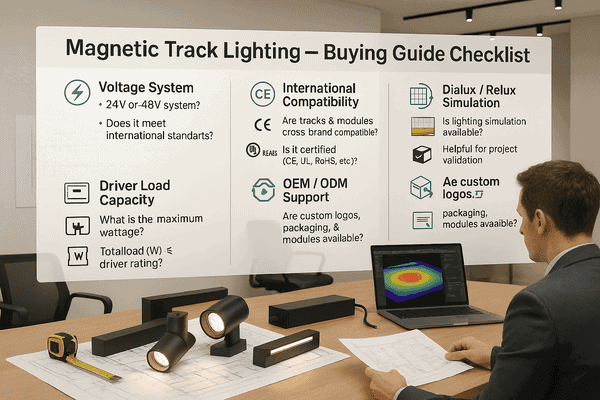
Magnetic track lighting is a powerful system, but only if installed and specified correctly. The most common mistakes include non-standard compatibility, power overload, poor heat dissipation, lack of certifications, and weak design planning. By avoiding these pitfalls, buyers can ensure their projects deliver both technical reliability and aesthetic excellence.
Buying Guide Checklist
For project managers, architects, and distributors, purchasing magnetic track lighting can feel overwhelming due to the many technical specifications and supplier options available. A structured checklist ensures that buyers make informed decisions and avoid common mistakes. Below is a practical guide you can use before placing an order.
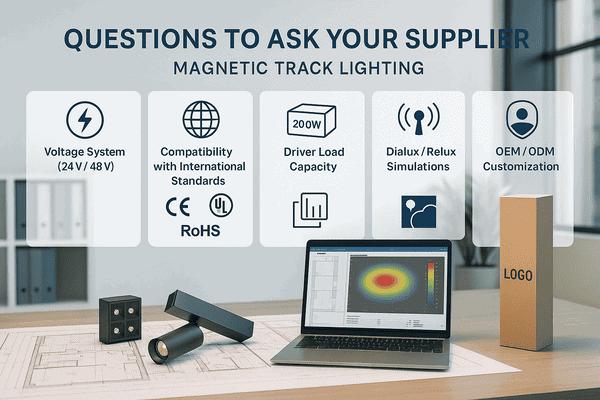
Questions to Ask Your Supplier
Before making a purchase, always confirm the following:
- What voltage system32 do you offer — 24V or 48V?
- Are the tracks and modules compatible with international standards?
- What is the maximum load capacity per driver?
- Can you provide Dialux/Relux lighting simulations33 for my project?
- Do you support OEM/ODM customization34 (logo, packaging, unique designs)?
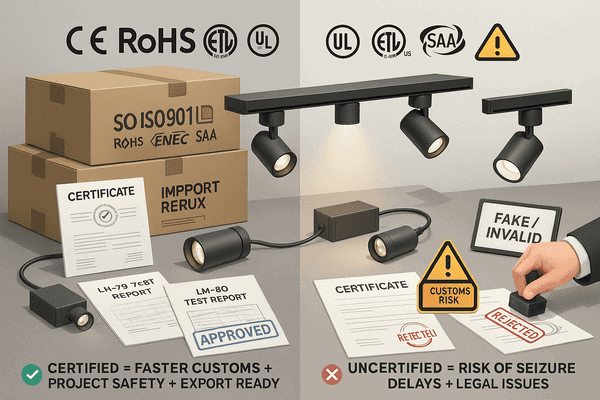
Certifications and Compliance
Certifications are critical for international trade. Without them, shipments can be blocked at customs or rejected by project inspectors.
- Europe: CE, RoHS, ENEC
- North America: UL, ETL
- Australia: SAA
- Global: ISO9001, LM79, LM80 test reports
MOQ & Lead Time Considerations
Buyers often overlook lead times, but they are crucial for project planning.
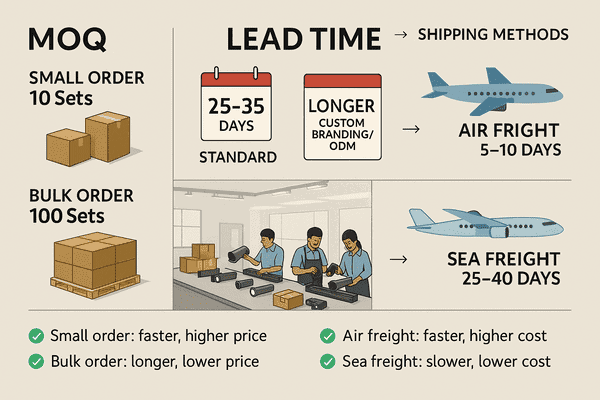
- MOQ (Minimum Order Quantity35): Some suppliers require 50–100 sets, while others offer smaller MOQs for sampling.
- Lead Time: Standard production takes 25–35 days, but custom projects may require longer.
- Shipping: Air freight is faster (5–10 days) but more expensive; sea freight reduces costs but can take 25–40 days.
Comparing Different Manufacturers
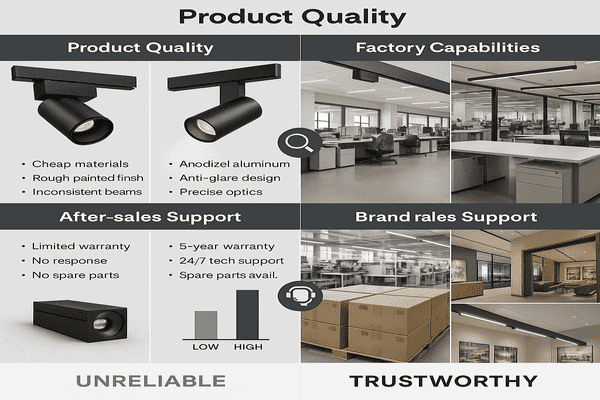
Not all suppliers offer the same level of quality or service. When comparing options, evaluate based on:
- Product Quality: Materials, finish, photometric performance.
- Factory Capabilities: OEM/ODM, in-house R&D, production scale.
- After-sales Support: Warranty terms, technical assistance, spare parts.
- Reputation: Customer feedback, case studies, international references.
Sample Evaluation
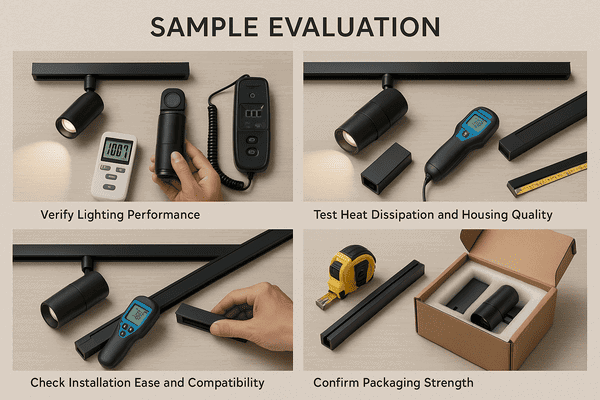
Never commit to a bulk order without testing samples first. A sample check allows you to:
- Verify lighting performance36 (beam angle, CRI, CCT).
- Test heat dissipation and housing quality.
- Check installation ease and compatibility with your project.
- Confirm packaging strength for international shipping.
By following this checklist, buyers can make confident purchasing decisions and avoid risks such as non-standard products, delays, or compliance issues. The most successful projects begin with a careful evaluation of suppliers, certifications, and samples — ensuring that the investment in magnetic track lighting delivers maximum value.
Future Trends in Magnetic Track Lighting
Magnetic track lighting is no longer a niche solution — it is evolving into a mainstream system across retail, hospitality, and residential projects. As technology advances and global design preferences shift, several key trends will shape the future of this lighting category over the next 5–10 years.
Integration with Smart Home & IoT37
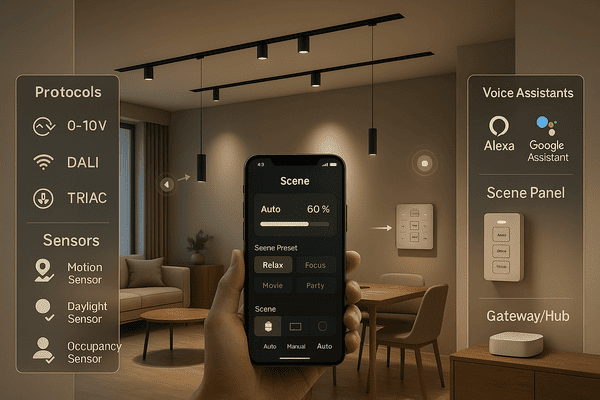
One of the strongest trends is the fusion of lighting with smart building technologies. Magnetic track systems are increasingly compatible with:
- Mobile Apps – Users can control brightness, scenes, and scheduling directly from smartphones.
- Voice Assistants – Integration with Amazon Alexa, Google Assistant, and Apple HomeKit.
- IoT Sensors – Motion, occupancy, and daylight sensors for automatic adjustment.
This smart integration allows magnetic track lighting to go beyond illumination — it becomes part of a connected environment, enhancing both comfort and energy efficiency.
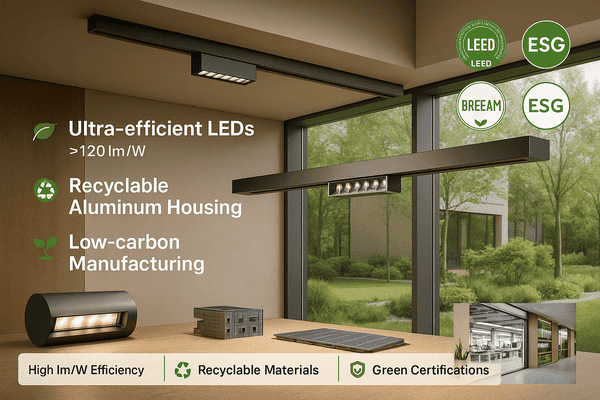
Sustainability & Eco-friendly Materials38
As governments tighten energy regulations, sustainability is a growing priority. Future magnetic track systems will focus on:
- Ultra-efficient LEDs with higher lm/W output.
- Eco-friendly materials such as recyclable aluminum housings.
- Low-carbon production processes, in line with ESG (Environmental, Social, Governance) standards.
Green building certifications like LEED and BREEAM are also driving demand for sustainable lighting solutions, making eco-conscious magnetic systems attractive to architects and developers.
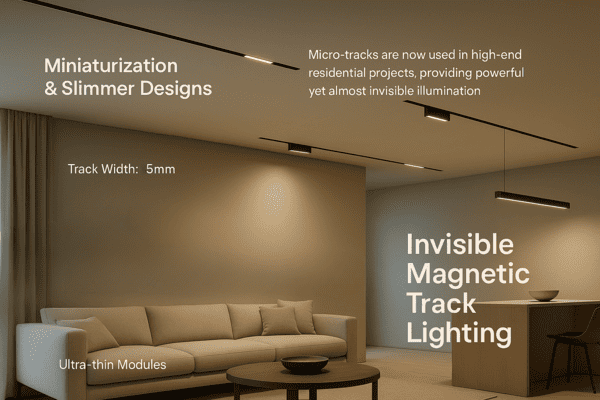
Miniaturization & Slimmer Designs39
Design minimalism will continue to dominate. Manufacturers are producing slimmer tracks (as narrow as 15mm) and ultra-thin modules that almost disappear into ceilings. These invisible lighting solutions fit perfectly with modern interiors, where architects prefer clean lines and discreet hardware.
Example: In high-end residential projects, micro-tracks are now used in living rooms and kitchens, providing powerful yet almost invisible illumination.
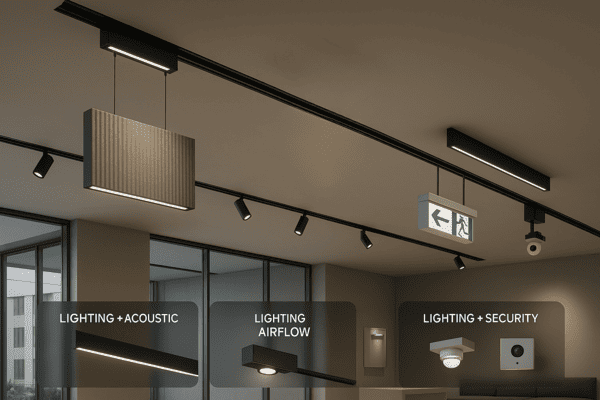
Hybrid Systems & New Module Types40
Future developments will include hybrid solutions that combine multiple functions in one system:
- Lighting + Acoustic Panels – integrating track lights with sound-absorbing panels.
- Lighting + Airflow – modules with built-in fans for climate comfort.
- Emergency & Security Modules – plug-in emergency lights or cameras for multi-purpose tracks.
Such innovations will expand the role of magnetic track lighting from pure illumination to multi-functional infrastructure.
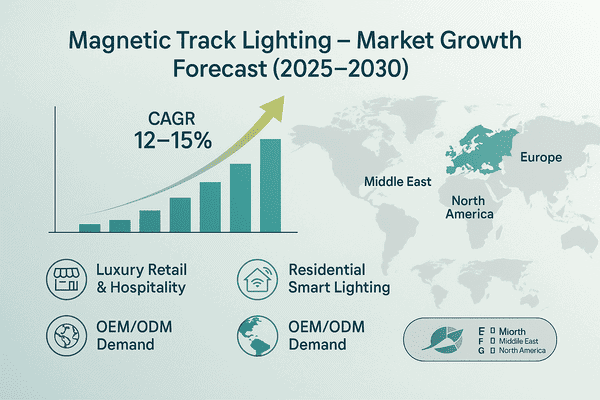
Market Growth Forecast
According to industry reports, the global market for magnetic track lighting is projected to grow at a CAGR of 12–15%41 between 2025 and 2030. Key growth drivers include:
- Rising adoption in luxury retail and hospitality42 projects.
- Expansion into residential smart lighting43 markets.
- Increasing demand for customized OEM/ODM solutions44 in Europe, the Middle East, and North America.
The future of magnetic track lighting lies in smart integration, sustainability, miniaturization, hybrid applications, and rapid market expansion. For buyers and designers, this means investing in magnetic systems is not only a decision for today, but also a way to stay ahead of evolving industry standards and customer expectations.
FAQ – Frequently Asked Questions
When evaluating magnetic track lighting45, buyers often ask similar questions about performance, safety, installation, and cost. Below is a list of the most frequently asked questions with clear, professional answers.
What is the difference between 24V and 48V magnetic track lighting45?
24V systems are typically used for smaller residential projects, while 48V systems are standard in commercial applications due to higher efficiency and greater power capacity. For large-scale projects, 48V is recommended to reduce voltage drop and support more fixtures on one track.
How long does a magnetic track light last?
High-quality LED modules in magnetic systems typically last 50,000+ hours (about 10–12 years with daily use). Lifespan depends on the quality of LEDs, heat dissipation, and drivers. Always request LM80 and TM21 test reports to verify performance.
Do I need a professional to install magnetic track lighting45?
Yes. While modules are easy to snap into place, the track installation and electrical wiring46 should be done by a certified electrician to ensure safety and compliance with local regulations.
Can magnetic track lighting45 be dimmed?
Yes. Most systems support dimming options such as 0-10V, DALI, TRIAC, or smart app control47. Buyers should confirm the dimming protocol with their supplier to match project requirements.
Are magnetic track lights safe?
Absolutely. Magnetic systems operate on low voltage (24V/48V DC)48, which reduces electrical hazards compared to traditional 220–240V systems. However, certified drivers and correct installation are essential for safety.
Can I mix different modules (spotlights, linear lights, wall washers) on the same track?
Yes. That is the main advantage of magnetic track lighting45. A single track can support multiple types of modules, allowing designers to create layered lighting effects without changing infrastructure.
Are magnetic track lights suitable for residential projects?
Yes. Although they are widely used in retail and hospitality, magnetic track systems are increasingly popular in modern homes, kitchens, and living rooms because of their sleek design and flexibility.
What certifications should I look for when buying magnetic track lighting45?
For international projects, check for CE, RoHS (Europe), UL/ETL (North America), SAA (Australia), ENEC (EU). These ensure compliance with safety and environmental standards.
What is the typical lead time for production?
Standard lead time is 25–35 days for bulk orders. Custom OEM/ODM projects may take longer, depending on complexity. Always confirm timelines with the supplier before placing an order.
How do I calculate the driver capacity I need?
Add up the total wattage of all fixtures connected to the track. Select a driver with 20–30% higher capacity than the total to ensure stability and avoid overload.
Can magnetic track lights be integrated into smart home systems?
Yes. Many systems are compatible with Wi-Fi, Bluetooth, Zigbee, and voice assistants (Alexa, Google, Apple HomeKit). Buyers should confirm compatibility when ordering.
What is the MOQ (Minimum Order Quantity) for magnetic track lights?
MOQ varies by supplier. Some require 50–100 sets, while others accept smaller orders for sampling. For OEM/ODM customization, higher MOQs are usually required.
Conclusion
Magnetic track lighting has evolved from a niche innovation into a mainstream solution that is transforming how spaces are illuminated. Its combination of flexibility, energy efficiency, aesthetics, and smart control makes it the preferred choice for retail chains, art galleries, hotels, offices, and even modern homes.
Throughout this guide, we have explored every aspect — from system basics and installation methods to cost analysis, customization options, and future trends. The conclusion is clear: magnetic track lighting is not just a trend, but a long-term investment in smarter, more sustainable lighting design.
For buyers, the next step is not only understanding the technology but also partnering with a reliable manufacturer who can deliver consistent quality, customization, and global support. This is where iLightin stands out. With 10+ years of manufacturing experience, OEM/ODM capabilities, strict quality control, and fast delivery, we are trusted by distributors, contractors, and designers worldwide.
By choosing iLightin, you gain more than a supplier — you gain a long-term partner in creating lighting systems that are innovative, reliable, and built for the future.
-
Explore the advantages of magnetic track lighting, including flexibility and modern design, to enhance your lighting solutions. ↩ ↩
-
Find out about energy-conscious lighting solutions that not only save energy but also enhance the aesthetic of your space. ↩
-
Explore this resource to understand how modern lighting systems enhance efficiency, aesthetics, and adaptability in various settings. ↩ ↩
-
Explore this resource to understand how magnetic track lights enhance flexibility, efficiency, and aesthetics in various settings. ↩
-
Explore how Magnetic Spotlights can enhance your space with focused lighting and versatility. ↩
-
Discover the advantages of Magnetic Linear Lights for creating a modern and glare-free office environment. ↩
-
Learn about the stylish and functional design options of Magnetic Pendant Lights for various spaces. ↩
-
Find out how Magnetic Wall Washers can elevate your retail space by highlighting key features. ↩
-
Uncover the unique functionalities of Specialty Modules that can be customized for specific lighting needs. ↩
-
Understand the benefits of magnetic track systems for versatile and efficient lighting solutions. ↩
-
Explore how magnetic track lighting enhances spaces across industries, offering flexibility and energy efficiency. ↩ ↩
-
Explore the advantages of magnetic track lighting, including flexibility and ease of installation. ↩ ↩ ↩
-
Learn the detailed steps for installing magnetic track lighting efficiently and safely. ↩
-
Discover why low-voltage systems are safer and more energy-efficient for modern lighting. ↩
-
Explore the advantages of magnetic track lighting, including energy efficiency and flexibility, to make an informed decision. ↩ ↩ ↩ ↩ ↩ ↩
-
Learn about the long-term financial benefits of magnetic track lighting, including energy and maintenance savings. ↩
-
Discover how magnetic track lighting can reduce maintenance costs and downtime for your business. ↩
-
Find out how much you can save on energy bills with magnetic track lighting compared to traditional options. ↩ ↩
-
Learn about potential savings on installation costs and how they impact overall investment. ↩
-
Explore the concept of TCO to see how magnetic track lighting can be a cost-effective choice over time. ↩
-
Explore this resource to understand how magnetic track lighting enhances flexibility and design in commercial environments. ↩ ↩
-
Explore this resource to understand how magnetic track systems enhance flexibility and customization in lighting design. ↩
-
Learn about color temperatures to create the perfect ambiance for your space. ↩
-
Discover the significance of high CRI in showcasing products accurately. ↩
-
Understand how smart controls can enhance convenience and energy efficiency. ↩
-
Find out how custom branding can elevate your product’s market presence. ↩
-
Explore how exclusive product lines can differentiate your offerings in the market. ↩
-
Understanding standardized systems ensures compatibility and reliability in your lighting projects. ↩
-
Aluminum heat sinks enhance LED performance and lifespan, making them crucial for high-powered lighting solutions. ↩
-
Layered lighting creates depth and interest in a space, improving overall ambiance and visual appeal. ↩
-
A photometric design optimizes lighting layouts, enhancing both functionality and aesthetics in your space. ↩
-
Understanding voltage systems is crucial for ensuring compatibility and safety in your lighting projects. ↩
-
Explore how these simulations can enhance your project planning and ensure optimal lighting performance. ↩
-
Learn how customization can help tailor products to your specific needs and enhance brand identity. ↩
-
Understanding MOQ can help you manage costs and inventory effectively for your projects. ↩
-
Learn the key metrics to assess lighting performance to ensure quality and satisfaction in your projects. ↩
-
Explore how smart home technologies are revolutionizing lighting control and enhancing user experience. ↩
-
Discover innovative sustainable materials that are shaping the future of lighting and reducing environmental impact. ↩
-
Learn how slim designs are transforming interiors and providing seamless lighting solutions. ↩
-
Find out how hybrid systems are integrating multiple functions to enhance lighting versatility. ↩
-
Understand the market dynamics and growth potential of magnetic track lighting in the coming years. ↩
-
See how high-end venues are utilizing advanced lighting solutions to enhance customer experience. ↩
-
Explore cutting-edge smart lighting solutions that are making homes more efficient and stylish. ↩
-
Learn about tailored lighting solutions that meet specific design and functionality needs. ↩
-
Explore the advantages of magnetic track lighting, including flexibility and design options for various spaces. ↩ ↩ ↩ ↩ ↩ ↩
-
Understand the importance of professional installation for safety and compliance in track lighting. ↩
-
Discover the various dimming options for magnetic track lighting to enhance your lighting experience. ↩
-
Find out why low voltage lighting systems are considered safer compared to traditional high voltage systems. ↩